Posts

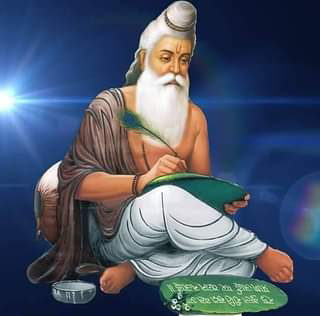
Maharishi Valmiki: The Revered Sage
Image
Introduction: Maharishi Valmiki, the celebrated author of the epic Ramayana, is one of the most revered sages in Indian history. His life and teachings continue to inspire and guide generations of seekers, making him a revered figure in literature and spirituality. In this blog post, we delve into the life of Maharishi Valmiki, exploring his childhood, transformative experiences, and the profound impact of his literary contributions. Maharishi Valmiki's Childhood and Early Life: Maharishi Valmiki, originally named Ratnakara, was born into a family of hunters in a forest area in northern India. Despite his humble background, Valmiki exhibited a curious mind and a thirst for knowledge. He eagerly sought wisdom from sages and learned the arts of survival, including archery and hunting. However, his life took a transformative turn that would change the course of his existence. The Encounter with Sage Narada: One fateful day, Ratnakara encountered the revered sage Narada Muni. Narada...

10 Frequently Asked Questions About Yudhishthira

1. Who was Yudhishthira in the Mahabharata? Yudhishthira was a central character in the ancient Indian epic, the Mahabharata. He was the eldest son of King Pandu and Queen Kunti, and he belonged to the Kuru dynasty. Yudhishthira was known for his righteousness, integrity, and adherence to dharma (moral duty). 2. What were the qualities and characteristics of Yudhishthira? Yudhishthira was known for his truthfulness, honesty, and unwavering commitment to righteousness. He possessed immense knowledge and wisdom and was respected for his sense of justice. Yudhishthira was also known for his calm and composed nature, patience, and resilience in the face of challenges. 3. What were Yudhishthira's significant achievements in the Mahabharata? Yudhishthira's most significant achievement was leading the Pandavas, his brothers, in the Kurukshetra war against their cousins, the Kauravas. He successfully united various allies and fought for the restoration of righteousness. After the war, ...

Yudhishthira: The Epitome of Virtues

Image
Introduction: In the epic Mahabharata, one character stands out for his unwavering commitment to righteousness and unwavering adherence to Dharma (duty). That character is none other than Yudhishthira, the eldest of the Pandavas. Yudhishthira's personality is a tapestry of remarkable qualities, which make him an embodiment of moral rectitude and integrity. In this blog post, we will delve into the depths of Yudhishthira's persona, exploring his virtues and examining instances from Mahabharata that highlight his remarkable qualities. Index: 1. The Unyielding Commitment to Truth (Satya): 2. The Unfaltering Sense of Duty (Dharma): 3. The Astute Wisdom and Prudence (Buddhi): 4. The Exemplary Sense of Justice and Fairness (Nyaya): 5. The Noble Compassion and Empathy (Daya): 6. The Unshakeable Integrity and Honesty (Satvik Charitra): 7. The Resilient Perseverance and Steadfastness (Dhairya): 8. The Deep Sense of Loyalty and Brotherhood (Bandhutva): 1. The Unyielding Commitment to Tru...

THE ULTIMATE SUMMARY OF MAHABHARATA (MAIN CHARACTERS, SYMBOLISM AND LEARNINGS)

Image
Introduction: Mahabharata, the ancient Indian epic, weaves a timeless tale of honor, duty, morality, and the human condition. Spanning across generations, it encompasses a vast array of characters, each playing a unique role in the grand narrative. In this blog post, we embark on a captivating journey to explore the ultimate summary of Mahabharata, shedding light on the roles and personalities of its main characters. Furthermore, we delve into the rich symbolism and profound learnings encapsulated within the epic. I. Setting the Stage: The Ancient Kingdoms and the Great War Before we dive into the characters, let's set the stage for the epic. Mahabharata unfolds in the kingdoms of Hastinapura and Indraprastha, where the story revolves around the conflict between two royal families, the Pandavas and the Kauravas. Their struggle for power and supremacy leads to the cataclysmic Kurukshetra War, a battle of immense consequences. II. The Main Characters: Archetypes of Virtue and Flaws 1...

7 DEADLIEST WEAPONS OF ALL TIME (PART 5: VAJRA- THE INVINCIBLE THUNDERBOLT OF INDRA)

Image
INTRODUCTION: In the realms of Hindu mythology, numerous captivating tales have captivated generations. Among the fascinating characters and their legendary weapons, the Vajra, also known as the thunderbolt, holds a significant place. This celestial weapon, wielded by Indra, the king of gods, is shrouded in mystery and power. In this blog, we delve into the origins, usage, mentions in ancient texts, and the enduring legacy of Vajra. I. Origin and Symbolism of Vajra: The Vajra traces its origins to the primordial depths of Hindu mythology. Legend has it that the gods, under the leadership of Indra, battled against the demon Vritra, who had seized control of the waters and clouds, causing a drought. In this epic struggle, Indra forged the Vajra from the bones of the sage Dadhichi. The weapon's name itself reflects its nature, as "Vajra" translates to "thunderbolt" or "diamond" in Sanskrit, signifying its indestructible and illuminating nature. II. The Mi...

7 DEADLIEST WEAPONS OF ALL TIME (PART 4: PINAKA- THE MIGHTY BOW OF LORD SHIVA)

Image
INTRODUCTION: Hindu mythology is replete with stories of weapons wielded by the gods and goddesses. Among these, Pinaka, the divine bow of Lord Shiva, holds a special place. Pinaka is not just a weapon, but a symbol of the god's power and a representation of his fierce nature. In this blog, we will explore the origin, usage, and significance of Pinaka, as well as its mention in ancient texts. ORIGIN OF THE PINAKA: Pinaka is said to have been created by the god Brahma, the creator of the universe. It was then gifted to Lord Shiva, who used it in battles against demons and evil forces. According to one myth, Pinaka was also used by Lord Shiva to marry Goddess Parvati, who was impressed by his skill in archery. USAGE OF THE PINAKA: Pinaka is often depicted as a massive bow, with a length of several miles. It is said to be made of gold and studded with precious gems. According to the ancient texts, Pinaka is capable of destroying entire worlds with a single shot. Lord Shiva is often de...

7 DEADLIEST WEAPONS OF ALL TIME (PART 3: SHARANGA- THE DIVINE BOW)

Image
INTRODUCTION: Bows have been an integral part of warfare and hunting since ancient times. The Sharanga, one of the most famous bows in Hindu mythology, is believed to be the weapon of Lord Vishnu, the preserver of the universe. The bow has been mentioned in several ancient texts and epics, and is revered as a symbol of power, strength, and divinity. In this blog post, we will delve into the origin, usage, and significance of Sharanga. ORIGIN OF SHARANGA: According to Hindu mythology, Sharanga was created by the divine architect of the gods, Vishwakarma. The bow was then passed down to Lord Vishnu, who is often depicted holding it in his hand. Sharanga is said to have been made from the bones of a demon named Bana, who was killed by Lord Vishnu. Another legend says that Sharanga was gifted to Lord Vishnu by the sage Agastya. USAGE OF SHARANGA: Sharanga is not just a regular bow, but a divine weapon capable of immense power and destruction. It is said that the bow was so powerful that ev...

7 DEADLIEST WEAPONS OF ALL TIME (PART 2: NARAYANASTRA- THE WEAPON OF NARAYANA HIMSELF)

Image
  INTRODUCTION: Narayanastra is one of the most powerful weapons mentioned in ancient Hindu texts. It is believed to be created by Lord Vishnu himself, and it was used by several warriors in the Mahabharata and Ramayana. The weapon has an immense destructive power, and its usage was only reserved for dire situations. In this blog post, we will explore the origin and usage of Narayanastra in Hindu mythology, its mention in ancient texts, and answer some frequently asked questions about this weapon. ORIGIN AND USAGE OF NARAYANASTRA: According to Hindu mythology, Narayanastra was created by Lord Vishnu for the protection of the universe. The weapon was bestowed to the Devas, who were the celestial beings in Hindu mythology. The Devas were given the power to use Narayanastra only when there was a dire need to protect the universe from evil forces. Lord Vishnu, also known as Narayana, created the Narayanastra for the protection of the universe.  Narayanastra was a divine weapon tha...

7 DEADLIEST WEAPONS OF ALL TIME (PART 1: UNVEILING THE MYSTERIES OF BRAHMASTRA)

Image
INTRODUCTION: In Hindu mythology, Brahmastra is considered one of the most powerful weapons ever created. It is believed that the weapon has the power to destroy the entire universe, and only a few individuals possess the knowledge to create and control it. In this blog post, we will explore the origin and usage of Brahmastra in Mahabharata and Ramayana, as well as its mention in ancient texts. ORIGIN OF BRAHMASTRA: Brahmastra is said to have been created by Lord Brahma, the creator of the universe, and was initially given to Lord Vishnu. The weapon was later passed on to Lord Shiva, who passed it down to Parashurama, one of his disciples. According to Hindu mythology, Brahmastra is considered to be the deadliest weapon ever created, and only a few warriors have been able to use it successfully. USAGE OF BRAHMASTRA IN MAHABHARATA: In the Mahabharata, Brahmastra was used several times during the Kurukshetra War. Arjuna, one of the Pandavas, was given the knowledge of how to use the weap...

LORD NARSIMHA- THE ROAR OF JUSTICE

Image
  INTRODUCTION: Narsimha Jayanti is one of the most auspicious festivals in the Hindu calendar, celebrated to commemorate the appearance of Lord Narsimha, the fourth avatar of Lord Vishnu. This year, Narsimha Jayanti will be celebrated on 4th May, 2023. Lord Narsimha is known for his fierce appearance and is worshipped as the protector of his devotees. Let's take a closer look at the purpose of his appearance, his deeds, and his mention in ancient texts. PURPOSE OF LORD NARSIMHA'S APPEARANCE: According to Hindu texts, Lord Narsimha appeared on Earth to protect his devotee, Prahlad, from his father, the demon king Hiranyakashipu. Prahlad was a devout follower of Lord Vishnu, much to the anger of his father, who wanted him to worship him instead. Hiranyakashipu tried to kill Prahlad many times but was unsuccessful due to the protection provided by Lord Vishnu. Finally, he decided to kill Prahlad himself. However, Lord Narsimha appeared from a pillar in the palace and killed Hiran...

7 LESSER KNOWN CHARACTERS IN MAHABHARATA (PART 1: YUYUTSU- FROM DISCRIMINATION TO REDEMPTION)

Image
  WHO WAS YUYUTSU? Yuyutsu, the son of Dhritarashtra and Gandhari, is a prominent character in the Indian epic, the Mahabharata. Yuyutsu was known for his intelligence and his strategic thinking. Despite being born to a different mother than his hundred Kaurava brothers, he was considered one of them and grew up alongside them. Yuyutsu was a loyal and devoted son, but his conscience eventually led him to side with the Pandavas in the epic's famous war. His decision to fight against his own brothers was a testament to his integrity and his commitment to righteousness. Although Yuyutsu is often overshadowed by the other characters in the Mahabharata, his character is an important one that showcases the complexities of familial relationships and the importance of making moral choices in difficult circumstances. WHAT WAS YUYUTSU'S CONTRIBUTION TO MAHABHARATA? Yuyutsu's contribution to the Mahabharata was mainly in the Kurukshetra War, where he played a significant role. Despite...

7 LESSER KNOWN CHARACTERS IN MAHABHARATA (PART 2: "THE FORGOTTEN SON: THE STORY OF VRISHAKETU")

Image
INTRODUCTION: The Mahabharata is an epic that is full of larger-than-life characters and their heroic deeds. From Arjuna to Karna to Draupadi, the story is filled with characters that are celebrated for their bravery and valour. However, there are also several lesser-known characters whose stories are just as compelling and impactful. In this blog post, we will explore the story of Vrishaketu, the forgotten son of Karna, and his contributions to the Mahabharata. Despite not being a major player in the epic, Vrishaketu's story serves as a reminder of the human cost of war and the importance of forgiveness and reconciliation. WHO WAS VRISHAKETU? Vrishaketu was the son of Karna, the great warrior who fought on the Kaurava side during the Kurukshetra war. He was Karna's only surviving son, as all of his other sons were killed during the war. As Karna's son, Vrishaketu inherited his father's great warrior skills and was trained in archery and combat. However, after the war, ...

5 QUALITIES TO LEARN FROM BHISHMA

Image
Bhishma is one of the most revered and respected characters in Hindu mythology. He is known for his unwavering commitment to duty, his self-control, and his wisdom. His character is a symbol of the highest ideals of Hinduism, and his qualities are an inspiration to people all over the world. Here are some of the qualities that make Bhishma such a revered figure: 1. UNWAVERING COMMITMENT TO DUTY Bhishma's commitment to his duty as a son and as a warrior is legendary. He served as the regent of Hastinapura for many years, even though he could have claimed the throne for himself. He also played a crucial role in the education and upbringing of the Kuru princes, including the Pandavas and the Kauravas. His commitment to duty is an inspiration to all those who value responsibility and selflessness. 2. SELF-CONTROL  Bhishma is known for his exceptional self-control. He had taken a vow of celibacy and had dedicated his life to serving his father. He renounced his claim to the throne and p...

7 LIFE-CHANGING SHLOKAS FROM THE BHAGAVAD GITA (PART 3: THE APPEARANCE OF THE LORD)

Image
 In the previous posts, I have mentioned about some of the best shlokas from the Bhagavad Gita. Click on the following links to read those posts. Part 1: The Nature of the Soul   https://sanskritdaily2479.blogspot.com/2023/04/7-life-changing-shlokas-from-bhagavad.html?m=1 Part 2: The Nature of Karma  https://sanskritdaily2479.blogspot.com/2023/04/7-life-changing-shlokas-from-bhagavad_29.html?m=1 In this post, I am going to cover some shlokas about the appearance of Lord Krishna, the Supreme Personality of Godhead. These are also perhaps some of the most famous shlokas from the Bhagavad Gita. They occur in chapter 4: The Transcendental Knowledge 1.  यदा यदा हि धर्मस्य ग्लानिर्भवति भारत | अभ्युत्थानमधर्मस्य तदात्मानं सृजाम्यहम् || (4.7) yadā yadā hi dharmasya glānir bhavati bhārata abhyutthānam adharmasya tadātmānaṁ sṛijāmyaham ' Whenever and wherever there is a decline in religious practice. O descendant of Bharata, and a predominant rise in irreligion- at that t...